


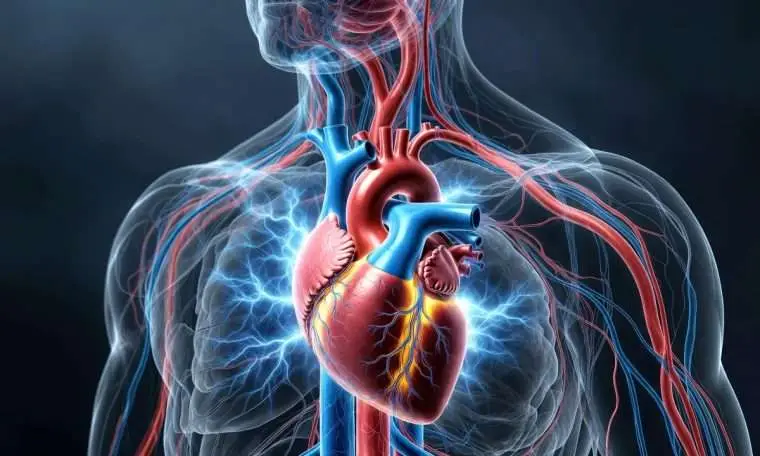
Why Blood Flow Is the Hidden Key to Energy, Longevity, and Whole-Body Health
If there is one system in the body that quietly determines how well everything else functions, it is circulation. You can eat perfectly, take the best supplements, and follow every new health trend, but if your blood is not moving efficiently through your body, none of it matters as much as you think.
Blood flow is the delivery system for life itself. Oxygen, nutrients, hormones, immune cells, and waste removal all depend on it. When circulation is strong, everything works better. When it declines, problems begin to appear, often slowly at first, then all at once. Improving vascular health after fifty becomes crucial as we navigate the natural aging process. Incorporating regular exercise, a balanced diet rich in antioxidants, and maintaining a healthy weight can significantly enhance circulation. Additionally, staying well-hydrated and managing stress levels are essential strategies to support overall vascular well-being.
At the center of this system sits one of the most important molecules ever discovered in human physiology: nitric oxide.
Understanding how blood pressure, circulation, and nitric oxide work together is not just useful knowledge. It is foundational.
The Circulatory System: More Than Just Pipes and Pressure
Most people think of the circulatory system in simple mechanical terms. The heart pumps. Blood flows. Pressure rises and falls. That is about as far as the typical understanding goes.
In reality, the system is dynamic, responsive, and constantly adapting to internal and external conditions.
Your arteries are not rigid tubes. They are living tissue. They expand and contract. They respond to signals from the nervous system. They adjust based on oxygen demand, stress levels, temperature, and activity.
At the microscopic level, your capillaries are delivering oxygen and nutrients to individual cells. At the same time, they are removing carbon dioxide and metabolic waste. This exchange must happen efficiently, or tissues begin to suffer.
When circulation is optimal, this entire system operates with remarkable precision. When it is impaired, the consequences ripple through every organ.
What Blood Pressure Really Represents
Blood pressure is often treated as the primary metric of cardiovascular health, but it is really just a surface indicator of deeper processes.
It reflects how much force is required to move blood through your vascular system. When that force is elevated, it usually means something is resisting flow.
That resistance can come from several sources:
- Narrowed arteries
- Reduced elasticity in vessel walls
- Inflammation within the endothelium
- Poor signaling that regulates dilation and constriction
So while high blood pressure is a concern, it is not the root problem. It is a signal that the system is under strain.
Lowering the number without addressing the underlying cause is like reducing the volume on an alarm without putting out the fire.
The Endothelium: Where the Real Control Happens
Inside every blood vessel is a thin layer of cells called the endothelium. This layer is not passive. It is one of the most active regulatory tissues in the body.
The endothelium controls:
- Vascular tone
- Blood flow distribution
- Inflammation levels
- Clotting and anti-clotting balance
When the endothelium is healthy, it produces nitric oxide, which signals the surrounding smooth muscle to relax. This allows blood vessels to widen, improving flow and reducing pressure.
When the endothelium becomes dysfunctional, nitric oxide production drops. Vessels become stiff. Blood flow becomes restricted. Pressure increases.
This condition, known as endothelial dysfunction, is now recognized as a central factor in cardiovascular disease.
Nitric Oxide: The Master Regulator of Blood Flow
In 1998, three scientists were awarded the Nobel Prize for discovering the role of nitric oxide in the cardiovascular system. That should tell you how significant this molecule is.
Nitric oxide is produced in the body from amino acids, primarily L-arginine, through enzymatic pathways. It acts as a signaling molecule that tells blood vessels to relax.
When nitric oxide levels are adequate:
- Arteries dilate properly
- Blood flows more easily
- Oxygen delivery improves
- Blood pressure stabilizes
When nitric oxide levels decline:
- Vessels constrict
- Blood flow becomes restricted
- Pressure increases
- Tissues receive less oxygen
This is not a minor adjustment. It is a system-wide shift.
Why Nitric Oxide Declines With Age
One of the most important realities to understand is that nitric oxide production decreases as we age.
By the time most people reach their 50s or 60s, their nitric oxide levels may be a fraction of what they were in their 20s.
Several factors contribute to this decline:
- Reduced enzyme efficiency
- Increased oxidative stress
- Poor dietary intake of key precursors
- Sedentary lifestyle
- Chronic inflammation
At the same time, the body produces more reactive oxygen species, which degrade nitric oxide before it can do its job.
The result is a gradual loss of vascular flexibility and efficiency.
The Role of Oxidative Stress
Oxidative stress is one of the biggest enemies of nitric oxide.
Free radicals, particularly superoxide, react with nitric oxide and neutralize it. This not only reduces its availability but also creates harmful byproducts that damage the endothelium further.
This creates a feedback loop:
- Less nitric oxide
- More vascular damage
- More oxidative stress
- Even less nitric oxide
Breaking this cycle is essential if you want to restore proper circulation.
Circulation and Whole-Body Health
Poor circulation does not just affect the heart. It affects everything.
When blood flow is compromised, you may begin to see:
- Fatigue and low energy
- Brain fog and reduced cognitive function
- Cold hands and feet
- Slower recovery from exercise
- Digestive inefficiency
- Reduced sexual function
- Increased risk of chronic disease
These are not isolated symptoms. They are systemic signals.
The body is telling you that delivery and removal systems are not working as they should.
Natural Pathways to Support Nitric Oxide and Circulation
There are several ways to support nitric oxide production and improve circulation naturally. The key is to work with the body’s existing pathways rather than forcing artificial changes.
Dietary Support
Certain foods provide the raw materials needed for nitric oxide production:
- Leafy greens such as spinach and arugula
- Beets and beetroot extracts
- Garlic
- Citrus fruits
- Pomegranate
These foods supply nitrates and antioxidants that support both production and preservation.
Amino Acids
L-arginine and L-citrulline are central to nitric oxide synthesis. Citrulline, in particular, may be more effective because it converts to arginine in the body and sustains levels over time.
Physical Activity
Exercise is one of the most powerful stimulators of nitric oxide production. Movement increases shear stress on blood vessel walls, which signals the endothelium to produce more nitric oxide.
Even moderate activity can have a measurable effect.
Sunlight and Lifestyle Factors
Sunlight exposure, stress reduction, and proper sleep all play roles in maintaining vascular health. Chronic stress and poor sleep patterns directly impair endothelial function.
Why Most Approaches Fall Short
Many conventional approaches focus on managing symptoms rather than restoring function.
If blood pressure is high, the goal becomes lowering it. If circulation is poor, the focus shifts to managing discomfort.
What is often missing is a strategy to restore the underlying signaling systems, particularly nitric oxide production and endothelial health.
Without that, improvements tend to be temporary or incomplete.
A Functional View of Blood Flow
When you step back and look at the system as a whole, a different picture emerges.
Blood pressure is not the problem. It is a measurement.
Circulation is not just about flow. It is about delivery and exchange.
Nitric oxide is not a supplement trend. It is a fundamental regulator of vascular function.
If you improve nitric oxide availability and support endothelial health, many of the downstream issues begin to correct themselves.
Where This Leads
This guide is meant to serve as a foundation.
From here, each component can be explored in greater depth:
- The specific mechanisms of nitric oxide production
- The role of individual nutrients and compounds
- The impact of aging on vascular systems
- Targeted strategies to restore circulation
Each of these deserves its own focused discussion.
Final Perspective
There is a quiet shift happening in how people understand health. The focus is moving away from isolated symptoms and toward systems.
Circulation is one of those systems. It connects everything.
When it is working well, you feel it in your energy, your clarity, and your resilience. When it is not, the effects show up everywhere.
If you want a single place to start improving your health in a meaningful way, this is it.
Restore blood flow, and the rest of the body begins to follow.


