


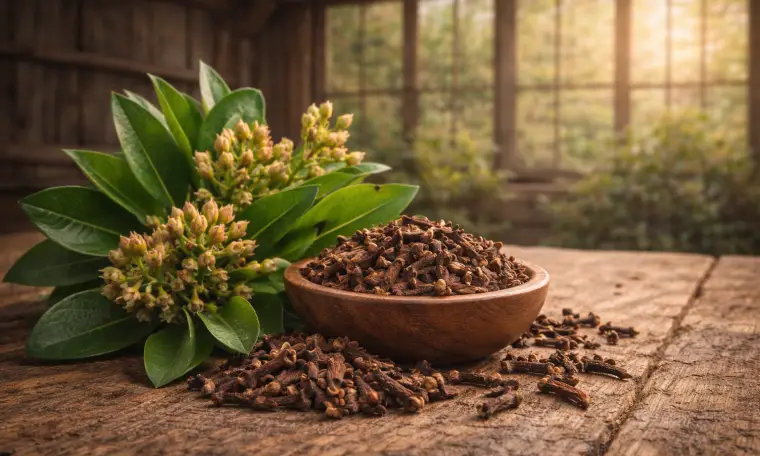
Clove benefits, eugenol activity, and its role in parasite cleansing and gut health
Clove plays a specific and important role in parasite-cleansing formulations. While many compounds address active organisms, clove is often referenced for its ability to impact eggs and reproductive cycles.
The key compound in clove is eugenol, a phenolic compound studied for its antimicrobial, antifungal, and antiparasitic properties. Eugenol has been shown to disrupt cellular membranes and interfere with enzyme activity in microbes.
In parasite protocols, clove is used to prevent reinfestation. Many organisms reproduce rapidly, and without addressing the egg stage, the cycle continues even after initial clearing.
Clove also contributes to reducing bacterial and fungal overgrowth, making it a dual-purpose ingredient that supports both cleansing and microbial balance.
Its inclusion in multi-herb formulas is strategic. It complements wormwood and black walnut by extending the effectiveness of the protocol beyond active organisms.


